| June 17, 2009 |  |
a timely reality check |

 San Diego CA (SPX) Jun 17, 2009 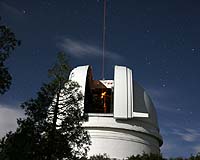 An innovative sky survey has begun returning images that will be used to detect unprecedented numbers of powerful cosmic explosions - called supernovae - in distant galaxies, and variable brightness stars in our own Milky Way. The survey also may soon reveal new classes of astronomical objects. All of these discoveries will stem from the Palomar Transient Factory (PTF) survey, which combin ... read more
  Washington (AFP) June 16, 2009
NASA embarks on a landmark mission of lunar exploration this week with the launch of probes to scout for water sources and landing sites, in a bid to lead humanity back on the first visit to the moon since 1972. The US space agency, with its eye on sending astronauts to Earth's natural satellite by 2020, is on course to blast off the dual LRO and LCROSS missions on Thursday atop an Atlas V ... more
|

| |||||||||||||||
| Previous Issues | Jun 16 | Jun 15 | Jun 12 | Jun 11 | Jun 10 |
  Bonn, Germany (SPX) Jun 17, 2009
"Of course," we might answer, "what a question!" However, we should also consider that our Sun - like all other stars - is a ball of hot gas. This gas ball, with a diameter of 1.4 million kilometres, is held together by gravity alone. This means that the Sun does not have a firm surface. Nevertheless, the Sun appears to us as a shining sphere with a sharp edge. The reason for this is that ... more   Chicago IL (SPX) Jun 17, 2009
The interstellar stuff that became incorporated into the planets and life on Earth has younger cosmic roots than theories predict, according to the University of Chicago postdoctoral scholar Philipp Heck and his international team of colleagues. Heck and his colleagues examined 22 interstellar grains from the Murchison meteorite for their analysis. Dying sun-like stars flung the Murchison ... more   London, UK (SPX) Jun 16, 2009
A novel bacterium that has been trapped more than three kilometres under glacial ice in Greenland for over 120 000 years, may hold clues as to what life forms might exist on other planets. Dr Jennifer Loveland-Curtze and a team of scientists from Pennsylvania State University report finding the novel microbe, which they have called Herminiimonas glaciei, in the current issue of the ... more   Pasadena CA (SPX) Jun 15, 2009
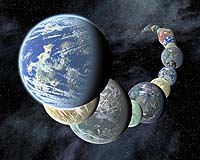
The most exotic frozen cocktails on Earth won't be found in a chic restaurant or trendy bar. Scientists are mixing up these icy concoctions in a rather nondescript laboratory not much bigger than a janitor's closet. The surroundings are spartan, but the recipes they're using are out of this world. Researchers in JPL's Ice Physical Properties Laboratory are recreating the ices found on the ... more |
. |
      |
. |



 |
. |
 Nanjing, China (XNA) Jun 15, 2009
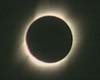
China will see the longest total solar eclipse in 500 years on July 22, a scientist said Saturday. The prime time of the total eclipse was expected to begin from 9 a.m. to 9:38 a.m. (Beijing Time), said Wang Sichao, a research fellow with the Nanjing-based Purple Mountain Observatory under the Chinese Academy of Sciences. "The total eclipse will last up to six minutes, or the longest one ... more  Pasadena CA (SPX) Jun 15, 2009
Roughly a billion years from now, the ever-increasing radiation from the sun will have heated Earth into inhabitability; the carbon dioxide in the atmosphere that serves as food for plant life will disappear, pulled out by the weathering of rocks; the oceans will evaporate; and all living things will disappear. Or maybe not quite so soon, say researchers from the California Institute of ... more  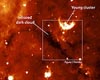 Manoa HI (SPX) Jun 12, 2009
Astronomers using the Submillimeter Array atop Mauna Kea in Hawaii have found a massive, quiescent object in a dark cloud that is likely to be the direct progenitor of a massive star or stars. Dr. Jonathan Swift of the Institute for Astronomy at the University of Hawaii at Manoa is presenting these results at a press conference at the American Astronomical Society meeting in Pasadena, California ... more  London, UK (SPX) Jun 12, 2009
Astronomers using the Science and Technology Facilities Council's (STFC) William Herschel Telescope (WHT) on La Palma have confirmed an effective way to search the atmospheres of planets for signs of life, vastly improving our chances of finding alien life outside our solar system. The team from the Instituto de Astrofisica de Canarias (IAC) used the WHT and the Nordic Optical Telescope ... more |
. |
     |
. |
   NASA launches Roman telescope on cosmic mapping mission
 DAMPE space telescope finds universal spectral feature that narrows field on cosmic ray origins
 Oxford Physicists Reach Fourth-Order Quantum Squeezing With Trapped Ion
 |
. |
|
| Previous Issues | Jun 16 | Jun 15 | Jun 12 | Jun 11 | Jun 10 |
| The contents herein, unless otherwise known to be public domain, are Copyright 1995-2009 - SpaceDaily. AFP and UPI Wire Stories are copyright Agence France-Presse and United Press International. ESA Portal Reports are copyright European Space Agency. All NASA sourced material is public domain. Additional copyrights may apply in whole or part to other bona fide parties. Advertising does not imply endorsement, agreement or approval of any opinions, statements or information provided by SpaceDaily on any web page published or hosted by SpaceDaily. Privacy statement |