| July 02, 2009 |  |
a timely reality check |

 Paris (AFP) July 1, 2009 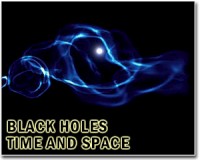 Astronomers on Wednesday said they had identified an intermediate class of black hole that could explain how supermassive, light-sucking monsters develop in the heart of galaxies. Their find - a black hole more than 500 times the mass of the Sun, on the fringe of galaxy ESO 243-249 - is reported in the latest issue of Nature, the British-based science journal. In terms of size, it lies ... read more
  Durham, UK (SPX) Jul 02, 2009
Our Milky Way galaxy only survived because it was already immersed in a large clump of dark matter which trapped gases inside it, scientists led by Durham University's Institute for Computational Cosmology (ICC) found. The research, to be presented at an international conference, also forms a core part of a new ICC movie charting the evolution of the Milky Way to be shown at the Royal ... more
|

| |||||||||||||||
| Previous Issues | Jul 01 | Jun 30 | Jun 29 | Jun 26 | Jun 25 |
 Paris, France (SPX) Jul 02, 2009
Astronomers have unveiled an unprecedented new atlas of the inner regions of the Milky Way, our home galaxy, peppered with thousands of previously undiscovered dense knots of cold cosmic dust - the potential birthplaces of new stars. Made using observations from the APEX telescope in Chile, this survey is the largest map of cold dust so far, and will prove an invaluable map for observation ... more   Tiruchirappalli, India (PTI) Jul 02, 2009
The Bangalore-based Indian Institute of Astrophysics was developing a payload for Indian Space Research Organisation's proposed solar mission Aditya to study the Sun's outermost region corona, a scientist of the institute said on Monday. The payload would be included in Aditya, a mini satellite, being developed by ISRO to study emissions taking place in the Sun during solar maxim ... more  Washington (AFP) June 30, 2009
US and European scientists were Tuesday bidding farewell to the tenacious solar probe Ulysses which has been recording data around the sun for more than 18 years, four times longer than planned. "Ulysses has taught us more than we ever expected about the sun and the way it interacts with the space surrounding it," said Richard Marsden, Ulysses project manager with the European Space Agency ... more   Tucson AZ (SPX) Jun 30, 2009
Robert C. Reedy, a senior scientist at the Tucson-based Planetary Science Institute, is mapping the Moon's surface elements using data gathered by an advanced gamma-ray spectrometer (GRS) that rode aboard the Japanese Kaguya spacecraft. The data promise to show chemical elements on the Moon that have never been identified before, and Reedy and the Kaguya GRS team already have found uranium ... more |
. |
        |
. |



 |
. |
 Paris, France (ESA) Jun 29, 2009
Upon receipt of the last command from Earth, the transmitter on Ulysses will switch off on 30 June, bringing one of the most successful and longest missions in spaceflight history to an end. After 18.6 years in space and defying several earlier expectations of its demise, the joint ESA/NASA solar orbiter Ulysses will achieve 'end of mission' on 30 June 2009. The final communication ... more  University Park PA (SPX) Jun 29, 2009
A novel bacterium that has been trapped more than three kilometres under glacial ice in Greenland for over 120 000 years, may hold clues as to what life forms might exist on other planets. Jennifer Loveland-Curtze and a team of scientists from Pennsylvania State University report finding the novel microbe, which they have called Herminiimonas glaciei, in the current issue of the ... more  Paris, France (SPX) Jun 29, 2009
At the dawn of this twenty-first century, cosmology is at a crossroads: 95% of the universe eludes observations. To evoke the mysteries of dark matter and dark energy the Laboratoire Univers et Theorie-LUTH (Observatoire de Paris-CNRS) marks the World Year of Astronomy with a series of events from June 29 to July 10 at the UNESCO Palace in Paris. Gathered at the initiative of LUTH's ... more  Greenbelt MD (SPX) Jun 29, 2009
The Lunar Reconnaissance Orbiter has successfully entered orbit around the moon following a nearly five-day journey. Engineers at NASA's Goddard Space Flight Center in Greenbelt, Md., confirmed the spacecraft's lunar orbit insertion at 6:27 a.m. EDT on June 23. A series of four engine burns through June 27 will finalize LRO's initial orbit. During this phase, each of its seven instruments ... more |
. |
      |
. |
   NASA launches Roman telescope on cosmic mapping mission
 DAMPE space telescope finds universal spectral feature that narrows field on cosmic ray origins
 Oxford Physicists Reach Fourth-Order Quantum Squeezing With Trapped Ion
 |
. |
|
| Previous Issues | Jul 01 | Jun 30 | Jun 29 | Jun 26 | Jun 25 |
| The contents herein, unless otherwise known to be public domain, are Copyright 1995-2009 - SpaceDaily. AFP and UPI Wire Stories are copyright Agence France-Presse and United Press International. ESA Portal Reports are copyright European Space Agency. All NASA sourced material is public domain. Additional copyrights may apply in whole or part to other bona fide parties. Advertising does not imply endorsement, agreement or approval of any opinions, statements or information provided by SpaceDaily on any web page published or hosted by SpaceDaily. Privacy statement |