| June 30, 2009 |  |
a timely reality check |

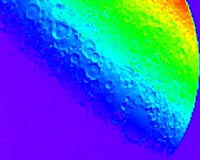
 Tucson AZ (SPX) Jun 30, 2009 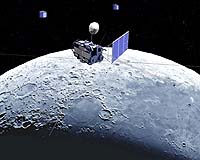 Robert C. Reedy, a senior scientist at the Tucson-based Planetary Science Institute, is mapping the Moon's surface elements using data gathered by an advanced gamma-ray spectrometer (GRS) that rode aboard the Japanese Kaguya spacecraft. The data promise to show chemical elements on the Moon that have never been identified before, and Reedy and the Kaguya GRS team already have found uranium ... read more
  Pasadena CA (SPX) Jun 30, 2009
Having completed the longest planned coasting period of its entire mission, Dawn is now back to its familiar routine. On June 8, the ion propulsion system was called back into action to propel the probe to its rendezvous with asteroid Vesta. The spacecraft began its 7-month coast period on October 31, 2008. Since then, it had used its ion thrusters for a measurement of the solar array ... more
|

| |||||||||||||||
| Previous Issues | Jun 29 | Jun 26 | Jun 25 | Jun 24 |
  Bethesda MD (SPX) Jun 29, 2009
Launchspace is seriously looking at the increasing risk of space debris interfering with operational satellites in a proactive way. Although no one knows when this will turn into a crisis, we do know it will happen, unless the world stops using space applications. But, the benefits of space are simply too important and they have become an integral part of modern living. The options seem obvious. ... more   Bonn, Germany (SPX) Jun 30, 2009
The longest documented storm on Earth lasted for just five weeks. Last year, astronomers observed a storm on Saturn that lasted for more than five months. However, on Jupiter, scientists in the 17th century observed a gigantic 'red eye' - known as the Great Red Spot - that has been observed continuously ever since and can be seen with amateur telescopes. In reality, the 'spot' is a ... more   Davos, Switzerland (SPX) Jun 29, 2009
Ice is a common feature of many of the worlds in the solar system with the potential to support life. Working out how to detect the signature of life - past or present - in ice will be a key part of solar system exploration. Project SLIce - Signatures of Life in Ice - is designed to find out both what signs of life might survive in ice, and how to detect it in a scientifically robust way. ... more   Paris, France (ESA) Jun 29, 2009
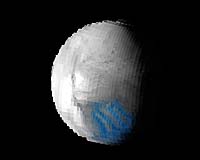
Upon receipt of the last command from Earth, the transmitter on Ulysses will switch off on 30 June, bringing one of the most successful and longest missions in spaceflight history to an end. After 18.6 years in space and defying several earlier expectations of its demise, the joint ESA/NASA solar orbiter Ulysses will achieve 'end of mission' on 30 June 2009. The final communication ... more |
. |
      |
. |



 |
. |
 Fairfax VA (SPX) Jun 26, 2009
General Dynamics Advanced Information Systems is providing the communications link for NASA's Lunar Reconnaissance Orbiter (LRO) mission launched on June 18, 2009. The mission will use General Dynamics-made transceivers to communicate with ground control as it maps and studies the lunar environment. General Dynamics Advanced Information Systems is a business unit of General Dynamics. ... more   Baltimore MD (SPX) Jun 26, 2009
The Space Telescope Science Institute (STScI) in Baltimore, Md., is partnering on a historic search for Earth-size planets around other stars. STScI is the data archive center for NASA's Kepler mission, a spacecraft that is undertaking a survey for Earth-size planets in our region of the galaxy. The spacecraft sent its first raw science data to STScI on June 19. The Institute was the logic ... more  Moffett Field CA (SPX) Jun 26, 2009
If life exists on Titan, it's anyone's guess what that life looks like. Saturn's largest moon is not a good candidate for Earth-like life because it usually lacks liquid water on the surface. But one of Titan's most promising features is the presence of lakes filled with liquid hydrocarbons, or molecules made of hydrogen and carbon, such as methane and ethane. These lakes were recently ... more  Ithaca NY (SPX) Jun 25, 2009
The mysterious 1908 Tunguska explosion that leveled 830 square miles of Siberian forest was almost certainly caused by a comet entering the Earth's atmosphere, says new Cornell University research. The conclusion is supported by an unlikely source: the exhaust plume from the NASA space shuttle launched a century later. The research, accepted for publication by the journal Geophysical ... more |
. |
    |
. |
   NASA launches Roman telescope on cosmic mapping mission
 DAMPE space telescope finds universal spectral feature that narrows field on cosmic ray origins
 Oxford Physicists Reach Fourth-Order Quantum Squeezing With Trapped Ion
 |
. |
|
| Previous Issues | Jun 29 | Jun 26 | Jun 25 | Jun 24 |
| The contents herein, unless otherwise known to be public domain, are Copyright 1995-2009 - SpaceDaily. AFP and UPI Wire Stories are copyright Agence France-Presse and United Press International. ESA Portal Reports are copyright European Space Agency. All NASA sourced material is public domain. Additional copyrights may apply in whole or part to other bona fide parties. Advertising does not imply endorsement, agreement or approval of any opinions, statements or information provided by SpaceDaily on any web page published or hosted by SpaceDaily. Privacy statement |