|
|

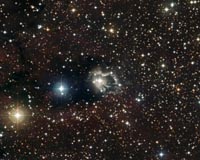
 Sydney, Australia (SPX) Aug 17, 2009 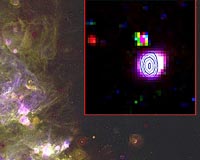 A team of scientists in Australia and the United States, led by Associate Professor Miroslav Filipovic from the University of Western Sydney, have discovered a new class of object which they call "Super Planetary Nebulae." They report their work in the journal Monthly Notices of the Royal Astronomical Society. Planetary nebulae are shells of gas and dust expelled by stars near the end of ... read more
  Washington DC (SPX) Aug 18, 2009
Will the universe expand outward for all of eternity and end in a vast, dark, cold, sterile, diffuse nothingness? Or will the "Big Bang" - the gargantuan explosion that formed the universe 14 billion years ago - end in the "Big Crunch?" Planets, stars and galaxies all hurtle inward and collapse into an incredibly hot, dense mass a billion times smaller than the period at the end of this ... more
|

| |||||||||||||||
| Previous Issues | Aug 17 | Aug 16 | Aug 13 | Aug 12 | Aug 11 |
| . |
  Greenbelt MD (SPX) Aug 18, 2009
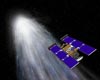
NASA scientists have discovered glycine, a fundamental building block of life, in samples of comet Wild 2 returned by NASA's Stardust spacecraft. "Glycine is an amino acid used by living organisms to make proteins, and this is the first time an amino acid has been found in a comet," said Dr. Jamie Elsila of NASA's Goddard Space Flight Center in Greenbelt, Md. "Our discovery supports the ... more   New Delhi, India (RIA Novosti) Aug 18, 2009
India and Russia have finished the design of a second unmanned lunar orbiter to be sent to the Moon in 2011-2012, the Indian Express newspaper said on Monday. The paper quoted Madhavan Nair, chairman of the Indian Space Research Organization (ISRO) as saying in Bangalore on Sunday: "Right now, the design has been completed. We had a joint review with Russian scientists here." ... more 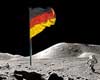 Berlin (UPI) Aug 13, 2009
 Germany is debating whether to launch an unmanned mission to the moon to help German companies secure expertise in the aerospace sector. "A German moon landing is possible during the course of the next decade, around 2015," Peter Hintze, state secretary for economy and technology, on Wednesday told public broadcaster ZDF. Such a mission would cost at least $2.2 billion, but ... more |
. |
|
|
. |
 Sydney, Australia (SPX) Aug 13, 2009
In December 1968, the crew of Apollo 8 became the first humans to orbit the Moon. Going further than any explorers before them, they gazed at the barren, cratered landscape beneath them, saw the Moon's far side with their own eyes, and took some history-making photographs of the Earth rising above the lunar horizon. On Christmas Eve, the crew made a live television broadcast to millions of ... more  Mumbai, India (SPX) Aug 14, 2009
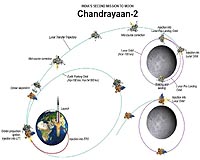
India plans to power some parts of the Chandrayaan II--its next unmanned mission to the moon- with nuclear energy and the feasibility studies are being carried out by Indian Space Research Organisation and Bhabha Atomic Research Centre. "We are thinking of powering some parts of Chandrayaan II with nuclear power and it will power the spacecraft when it revolves aroung the dark side of the ... more   Pasadena CA (SPX) Aug 14, 2009
For all its similarities to Earth-clouds that pour rain (albeit liquid methane not liquid water) onto the surface producing lakes and rivers, vast dune fields in desert-like regions, plus a smoggy orange atmosphere that looks like Los Angeles's during fire season-Saturn's largest moon, Titan, is generally "a very bland place, weatherwise," says Mike Brown of the California Institute of ... more |
. |
| Previous Issues | Aug 17 | Aug 16 | Aug 13 | Aug 12 | Aug 11 |
| The contents herein, unless otherwise known to be public domain, are Copyright 1995-2009 - SpaceDaily. AFP and UPI Wire Stories are copyright Agence France-Presse and United Press International. ESA Portal Reports are copyright European Space Agency. All NASA sourced material is public domain. Additional copyrights may apply in whole or part to other bona fide parties. Advertising does not imply endorsement, agreement or approval of any opinions, statements or information provided by SpaceDaily on any web page published or hosted by SpaceDaily. Privacy statement |