|
|

 Bangalore, India (PTI) Aug 17, 2009 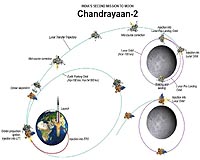 India has completed the design of Chandrayaan-2, its next mission to the moon - this time in collaboration with Russia - that would have a lander and rover which can collect samples of the lunar soil and analyse them and send back the data. "Right now, the design has been completed. We had a joint review with Russian scientists here," Chairman of Indian Space Research Organisation ... read more
  Moffett Field CA (SPX) Aug 17, 2009
A team of scientists has found a new planet which orbits the wrong way around its host star. The planet, named WASP-17, and orbiting a star 1000 light years away, was found by the UK's WASP project in collaboration with Geneva Observatory. The discovery, which casts new light on how planetary systems form and evolve, was announced August 12 in a paper submitted to Astrophysical Journal. ... more
|

| |||||||||||||||
| Previous Issues | Aug 16 | Aug 13 | Aug 12 | Aug 11 | Aug 10 |
| . |
  Huntsville AL (SPX) Aug 17, 2009
NASA's space shuttle program is winding down. With only about half a dozen more flights, shuttle crews will put the finishing touches on the International Space Station (ISS), bringing to an end twelve years of unprecedented orbital construction. The icon and workhorse of the American space program will have finished its Great Task. But, as Apple's CEO Steve Jobs might say, there is one ... more   Greenbelt MD (SPX) Aug 17, 2009
"Why is the sun's corona so darned hot?" asks James Klimchuk, an astrophysicist at the Goddard Space Flight Center's Solar Physics Laboratory in Greenbelt, Md. The mystery of why temperatures in the solar corona, the sun's outer atmosphere, soar to several million degrees Kelvin (K) -much hotter than temperatures nearer the sun's surface-has puzzled scientists for decades. New observations ... more  Beijing, China (China Daily) Aug 17, 2009
Ouyang Ziyuan, academician at China Academy of Sciences and chief scientist of China's moon exploration project, talked with China Daily's Ma Chao about Chang'e 1, the first spacecraft sent by China to the lunar orbit as well as the future of China's exploration of the moon. CD: Between October 2007 and March of this year, the Chang'e 1 spacecraft circled the moon for nearly 18 months. ... more |
. |
|
|
. |
  Cleveland OH (SPX) Aug 14, 2009
For the first time in more than eight years, NASA is able to conduct scientific testing and studies in Outer space. On August 25, 2009, NASA will take six experiments, two from the US and four from Europe, into the science laboratory aboard Space Shuttle Discovery. The two US experiments are aimed at studying the way in which single-crystal castings solidify on earth vs. in space. ... more   Flagstaff AZ (SPX) Aug 14, 2009
In a case of persistent interplanetary detective work using powerful ground-based telescopes, a team of astronomers located and tracked the first bright but transient clouds over tropical latitudes on Saturn's moon Titan. The astronomers used the Gemini North telescope and NASA's Infrared Telescope Facility (IRTF) in an almost-nightly observing program providing new insights into the nature of ... more 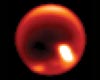 Mauna Kea hi (SPX) Aug 14, 2009
A paper that describes the first storm observed in the tropical latitudes of Saturn's moon Titan will be published in the journal Nature on August 13. The rain from large clouds such as these is actually liquid methane and may be responsible for forming the channels and other features near the equator observed by the Huygens probe in 2005. The huge storm, observed with the NASA Infrared ... more |
. |
| Previous Issues | Aug 16 | Aug 13 | Aug 12 | Aug 11 | Aug 10 |
| The contents herein, unless otherwise known to be public domain, are Copyright 1995-2009 - SpaceDaily. AFP and UPI Wire Stories are copyright Agence France-Presse and United Press International. ESA Portal Reports are copyright European Space Agency. All NASA sourced material is public domain. Additional copyrights may apply in whole or part to other bona fide parties. Advertising does not imply endorsement, agreement or approval of any opinions, statements or information provided by SpaceDaily on any web page published or hosted by SpaceDaily. Privacy statement |