| May 04, 2009 |  |
a timely reality check |

|
The Asteroids Are Coming Greenbelt MD (SPX) May 04, 2009  This isn't just "buzz" to get you excited about a new movie coming; we really are being buzzed by asteroids and other NEOs (Near Earth Objects), and one day these conjunctions could become collisions! There are lots of NEOs out there orbiting the sun. Some, like comets, are less worrisome since they are composed primarily of ice and small, rocky particles that dissipate upon entering Earth ... read more
|

| |||||||||||||||
| Previous Issues | May 01 | Apr 28 | Apr 27 |
Servicing Mission 4 - The Fifth And Final Visit To Hubble Cape Canaveral FL (SPX) May 04, 2009
On 11 May 2009 the Space Shuttle Atlantis will launch with a crew of seven to visit the NASA/ESA Hubble Space Telescope and carry out the fifth and final servicing mission. The replacement and repair of several instruments will see Hubble equipped to continue its program of discovery well into the next decade. The combination of Hubble's powerful suite of instruments and its position far a ... more Rogue Black Holes May Roam Milky Way  Boston, UK (SPX) May 04, 2009
It sounds like the plot of a sci-fi movie: rogue black holes roaming our galaxy, threatening to swallow anything that gets too close. In fact, new calculations by Ryan O'Leary and Avi Loeb (Harvard-Smithsonian Center for Astrophysics) suggest that hundreds of massive black holes, left over from the galaxy-building days of the early universe, may wander the Milky Way. Good news, howev ... more GLOBE At Night Receives Record Number Of Dark-Skies Observations  Washington DC (SPX) May 04, 2009
The global citizen-science campaign GLOBE at Night 2009 recorded 80 percent more observations of the world's dark skies than the program's previous record - including double the number of digital measurements - thanks in large part to active participation and publicity from the network of 140 countries currently celebrating the International Year of Astronomy 2009 (IYA2009). Now in its fou ... more NIST Super-Sensors To Measure Signature Of Inflationary Universe  Washington DC (SPX) May 04, 2009
What happened in the first trillionth of a trillionth of a trillionth of a second after the Big Bang? Super-sensitive microwave detectors, built at the National Institute of Standards and Technology (NIST), may soon help scientists find out. The new sensors, described at the American Physical Society (APS) meeting in Denver, were made for a potentially ground-breaking experiment by a ... more Making The Space Environment Safer For Civil And Commercial Users  Washington DC (SPX) May 04, 2009
The House Committee on Science and Technology's Subcommittee on Space and Aeronautics held a hearing to examine the challenges faced by civil and commercial space users as space traffic and space debris in Earth orbit continue to increase. Subcommittee Members questioned witnesses about potential measures to improve the information available to civil and commercial users to avoid in-space ... more |
stellar-chemistry:
 skynightly:  gamma:  |
 Pasadena CA (SPX) May 01, 2009
NASA's Galaxy Evolution Explorer Mission marks its sixth anniversary studying galaxies beyond our Milky Way through its sensitive ultraviolet telescope, the only such far-ultraviolet detector in space. The mission studies the shape, brightness, size and distance of galaxies across 10 billion years of cosmic history, giving scientists a wealth of data to help us better understand the origin ... more Herschel Cryostat Filled With Liquid Helium In Preparation For May Launch  Paris, France (ESA) May 01, 2009
One of the last activities to take place in S5B is the filling of the Herschel cryostat with liquid helium and its conversion into superfluid helium-II. The primary objective of achieving a full cryostat, above 95%, with a helium temperature below 1.7 Kelvin was reached on Friday 25 April and the activities now focus on maintaining the good helium conditions until the spacecraft can be mov ... more Some planets may fall into their stars  Seattle, April 29, 2009
 U.S. astronomers say some of the hundreds of planets that once orbited stars outside our solar system may have fallen into their stars and no longer exist. University of Washington astronomer Rory Barnes says recent computer modeling has provided the first evidence gravitational forces might pull a planet into its parent star. "When we look at the observed properties of extrasola ... more Duke Physicists See The Cosmos In A Coffee Cup  Durham NC (SPX) Apr 20, 2009
A Duke University professor and his graduate student have discovered a universal principle that unites the curious interplay of light and shadow on the surface of your morning coffee with the way gravity magnifies and distorts light from distant galaxies. They think scientists will be able to use violations of this principle to map unseen clumps of dark matter in the universe. Light ... more |
meteor:
 meteor: gamma:  |
 Pasadena CA (SPX) May 01, 2009
The upgraded Dawn spacecraft is now traveling in a new direction in its orbit around the Sun. The mission continues to go smoothly during this long coasting period, scheduled to conclude in June, when powered flight with the ion propulsion system will resume. Dawn has many computers in its onboard crew and one that serves as the captain of the ship. This primary computer's software had bee ... more An Active Mercury 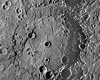 Huntsville AL (SPX) May 01, 2009
A NASA spacecraft gliding over the surface of Mercury has revealed that the planet's atmosphere, magnetosphere, and its geological past display greater levels of activity than scientists first suspected. The probe also discovered a large impact basin named "Rembrandt" measuring about 430 miles in diameter - equal to the distance between Washington and Boston. These new findings and more ar ... more New mission to Hubble scheduled for May 11  Washington (AFP) April 30, 2009
NASA said Thursday it will launch its final shuttle mission to the Hubble space telescope on May 11, a day earlier than planned, to avoid conflicts with other scheduled missions. The new launch date is scheduled for 1801 GMT on May 11 from the Kennedy Space Center near Cape Canaveral, Florida, NASA said. Space Shuttle program deputy director LeRoy Cain said last week that the shuttle Atl ... more Mercury flyby unveiled active inner planet: studies  Washington (AFP) April 30, 2009
The US space probe MESSENGER's second fly-by of the planet Mercury in October 2008 revealed the solar system's smallest planet to be far more active than previously thought, four studies said Thursday. The MESSENGER (MErcury Surface, Space ENvironment, GEochemistry and Ranging) probe's cameras took more than 1,200 images of the surface, including details of a mammoth well-preserved 692-kilom ... more
|
exo-life:
 stellar-chemistry:  extrasolar:  |
|
| Previous Issues | May 01 | Apr 28 | Apr 27 |
| The contents herein, unless otherwise known to be public domain, are Copyright 1995-2007 - SpaceDaily. AFP and UPI Wire Stories are copyright Agence France-Presse and United Press International. ESA Portal Reports are copyright European Space Agency. All NASA sourced material is public domain. Additional copyrights may apply in whole or part to other bona fide parties. Advertising does not imply endorsement, agreement or approval of any opinions, statements or information provided by SpaceDaily on any web page published or hosted by SpaceDaily. Privacy statement |