| May 01, 2009 |  |
a timely reality check |

|
Astronomer searches for precursors of life Ann Arbor, Mich., April 28, 2009  A University of Michigan astronomer says he will use the European Space Agency's Herschel Space Telescope to search for the precursors of life.
Associate Professor Ted Bergin said many organic molecules that make up life on Earth have also been found in space. Bergin wants to study those chemical compounds to gain insights into how organic molecules form in space, and, possibly, how lif ... read more
A University of Michigan astronomer says he will use the European Space Agency's Herschel Space Telescope to search for the precursors of life.
Associate Professor Ted Bergin said many organic molecules that make up life on Earth have also been found in space. Bergin wants to study those chemical compounds to gain insights into how organic molecules form in space, and, possibly, how lif ... read more
|

| |||||||||||||||
| Previous Issues | Apr 27 | Apr 24 |
Some planets may fall into their stars Seattle, April 29, 2009
 U.S. astronomers say some of the hundreds of planets that once orbited stars outside our solar system may have fallen into their stars and no longer exist. University of Washington astronomer Rory Barnes says recent computer modeling has provided the first evidence gravitational forces might pull a planet into its parent star. "When we look at the observed properties of extrasola ... more Gamma-ray burst sets distance record  Washington, April 28, 2009
 The U.S. space agency says its Swift satellite has found a gamma-ray burst from a star that died when the universe was only 630 million years old. The National Aeronautics and Space Administration said the event occurred when the universe was less than 5 percent of its present age and is the most distant cosmic explosion ever seen. "Swift was designed to catch these very distant ... more Search for meteor in Arizona  Sedona, Ariz., April 27, 2009
 Authorities in Arizona said there has been no sign that a large meteor reported in the skies near Sedona made impact with the ground. A spokesman for the Pinewood Fire Department in Munds Hill, near Sedona, said a crew drove up and down Interstate 17 but could find no evidence of the fireball that witnesses said lit up the sky Saturday night, the Arizona Daily Sun, Flagstaff, Ariz., rep ... more Duke Physicists See The Cosmos In A Coffee Cup  Durham NC (SPX) Apr 20, 2009
A Duke University professor and his graduate student have discovered a universal principle that unites the curious interplay of light and shadow on the surface of your morning coffee with the way gravity magnifies and distorts light from distant galaxies. They think scientists will be able to use violations of this principle to map unseen clumps of dark matter in the universe. Light ... more Search on for Toronto-area meteorite bits
Toronto, April 29, 2009 Canadians living north and northeast of Toronto are being asked to help search for meteorite fragments from a fireball last month. In a release, the Royal Ontario Museum in Toronto and the University of Western Ontario in London said analysis of a network of sky camera footage shows a slow-moving fireball swept eastward on March 15 at 8:37 p.m. near the small city of Newmarket. T ... more |
extrasolar:
 exo-life:  hubble:  |
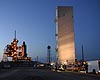 Cape Canaveral FL (SPX) Apr 27, 2009
The payload canister with the Hubble Space Telescope equipment arrives at the base of Launch Pad 39A where space shuttle Atlantis stands. Image Credit: NASA/Kim Shiflett STS-125: Mission to Service NASA's Hubble Space Telescope Veteran astronaut Scott Altman will command the final space shuttle mission to service NASA's Hubble Space Telescope, and retired Navy Capt. Gregory C. Johnson wil ... more Ancient Ecosystem Thrives Millions Of Years Below Antarctic Glacier 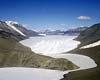 Bozeman MT (SPX) Apr 22, 2009
Scientists have found an ancient ecosystem below an Antarctic glacier and learned that it survived millions of years by transforming sulfur and iron compounds for growth. Described in the latest issue of Science, the ecosystem lives without light or oxygen in a pool of brine trapped below Taylor Glacier and next to frozen Lake Bonney in eastern Antarctica, said John Priscu, co-author of th ... more Hubble Provides New Evidence For Dark Matter Around Small Galaxies 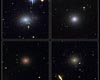 Boston MA (SPX) Mar 13, 2009
The NASA/ESA Hubble Space Telescope has uncovered a strong new line of evidence that galaxies are embedded in halos of dark matter. Peering into the tumultuous heart of the nearby Perseus galaxy cluster, Hubble discovered a large population of small galaxies that have remained intact while larger galaxies around them are being ripped apart by the gravitational tug of other galaxies. ... more Starlight, Star Bright 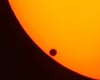 Moffett Field CA (SPX) Mar 13, 2009
"Our holy grail in exoplanet science is to find an Earth twin," says Sara Seager of MIT. An Earth twin would have three crucial characteristics: it would be a rocky planet the same size as Earth; it would orbit a sun-like star; and it would be located in its star's habitable zone, at the same distance from its star that the Earth is from the sun. Such a planet would be a prime candid ... more |
exo-life:
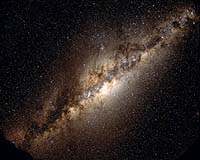 extrasolar:  cassini:  |
 Paris, France (SPX) Mar 12, 2009
Astronomers have obtained exceptional 3D views of distant galaxies, seen when the Universe was half its current age, by combining the twin strengths of the NASA/ESA Hubble Space Telescope's acute eye, and the capacity of ESO's Very Large Telescope to probe the motions of gas in tiny objects. By looking at this unique "history book" of our Universe, at an epoch when the Sun and the Earth di ... more Fermi's Best-Ever Look At Gamma-Ray Sky 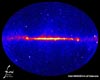 Greenbelt MD (SPX) Mar 12, 2009
A new map combining nearly three months of data from NASA's Fermi Gamma-ray Space Telescope is giving astronomers an unprecedented look at the high-energy cosmos. To Fermi's eyes, the universe is ablaze with gamma rays from sources within the solar system to galaxies billions of light-years away. "Fermi has given us a deeper and better-resolved view of the gamma-ray sky than any previous ... more ESA's Gravity Satellite Moves To Launch Pad 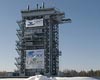 Paris, France (SPX) Mar 12, 2009
With liftoff just five days away, ESA's GOCE spacecraft - encased in the protective half-shells of the launcher fairing - has been transported from the cleanroom and installed in the launch tower at the Plesetsk Cosmodrome in northern Russia. The so-called Upper Composite, which comprises the Gravity field and steady-state Ocean Explorer (GOCE) satellite joined to the Breeze-KM Upper Stage ... more A Black Hole In Medusa's Hair 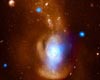 Boston MA (SPX) Mar 12, 2009
This composite image of the Medusa galaxy (also known as NGC 4194) shows X-ray data from NASA's Chandra X-ray Observatory in blue and optical light from the Hubble Space Telescope in orange. Located above the center of the galaxy and seen in the optical data, the "hair" of the Medusa - made of snakes in the Greek myth - is a tidal tail formed by a collision between galaxies. The bright X-r ... more
|
cassini:
 stellar-chemistry:  solarscience:  |
|
| Previous Issues | Apr 27 | Apr 24 |
| The contents herein, unless otherwise known to be public domain, are Copyright 1995-2007 - SpaceDaily. AFP and UPI Wire Stories are copyright Agence France-Presse and United Press International. ESA Portal Reports are copyright European Space Agency. All NASA sourced material is public domain. Additional copyrights may apply in whole or part to other bona fide parties. Advertising does not imply endorsement, agreement or approval of any opinions, statements or information provided by SpaceDaily on any web page published or hosted by SpaceDaily. Privacy statement |