|

  Are The Largest Stars Born Like Our Sun
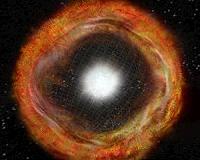
Hilo HI (SPX) Jan 28, 2010 Explaining how the most massive stars are born, deep within their stellar nurseries, is one of the most persistent mysteries in modern astronomy. Now, observations at the Gemini Observatory provide convincing new evidence that these stellar heavyweights may be born in much the same manner as lightweights like our Sun. "The problem is that when the most massive stars form it happens very quickly compared to stars like our Sun, and by the time they break free of their natal clouds they are already t ... read more |
. |
 |
|
Free Space, Earth, Energy And Military Newsletters - Delivered Daily |
|
|
. |
  NASA Adds Israeli Technical Expertise To Lunar Science Research
Washington DC (SPX) Jan 28, 2010 NASA and the Israel Space Agency have signed a joint statement that recognizes the Israel Network for Lunar Science and Exploration, or INLSE, as an affiliate partner with the NASA Lunar Science Institute at the agency's Ames Research Center in Moffett Field, Calif. "NASA looks forward to working with this distinguished Israeli organization to benefit from our shared expertise and advance our understanding of lunar science," said agency Administrator Charles Bolden. "We want to develop more ... read more |
| .. |
  Sydney, Australia (SPX) Jan 27, 2010
In 2009, it was found that some polar regions of the Moon are the coldest places in the solar system. It's even colder there than distant, frozen Pluto! Some craters are permanently blocked from sunlight, and apparently lack sources of heat from underground. These areas aren't just cold at certain times. They never get warm at all. The Moon's cold traps have been celebrated for another rea ... more   Pasadena, Calif. (UPI) Jan 27, 2009
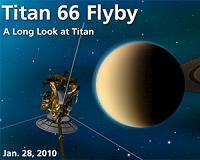
 NASA says its Cassini spacecraft will return to Saturn's largest moon, Titan, this week to again inspect the cloud-shrouded moon, but from 4,654 miles away. The Thursday flyby will place Cassini more than 3,970 miles higher above Titan's surface than it was during it's Jan. 12 flyby, but scientists say that will not make the new mission any less valuable. Instead, NASA said the h ... more   Paris, France (ESA) Jan 27, 2010
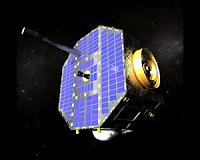
Packed with novel devices and science instruments, Proba-2 is demonstrating technologies for future ESA missions while providing new views of our Sun. At a press conference on Tuesday at the Royal Observatory of Belgium in Brussels, the team behind the small satellite declared themselves extremely happy with its first three months in orbit and unveiled Proba-2's first solar observations. ... more |
.. |
  Looking For Life In The Multiverse   'Blazing ring' eclipse races across Africa, Asia   Instant online solar energy quotes Solar Energy Solutions from ABC Solar |
.. |
|
|
Free Space, Earth, Energy And Military Newsletters - Delivered Daily |
|
|
. |
  ISRO Launches Rockets To Study Eclipse
New Delhi, India (PTI) Jan 18, 2010 The millennium's longest solar eclipse gave a unique chance to Indian Space Research Organisation (ISRO) scientists and astronomy lovers to study the event on Friday, with the space agency launching rockets and celestial gazers aiming telescopes at the sky to watch the moon's shadow covering the sun. Vikram Sarabhai Space Centre (VSSC), Thiruvananthapuram, launched a series of Rohini Sounding Rockets from TERLS, Thumba, to investigate the effects of the solar eclipse on the atmosphere. T ... read more |
 |
 |
 |
 |
 |
 |
 |
 |
 |
| The contents herein, unless otherwise known to be public domain, are Copyright 1995-2010 - SpaceDaily. AFP and UPI Wire Stories are copyright Agence France-Presse and United Press International. ESA Portal Reports are copyright European Space Agency. All NASA sourced material is public domain. Additional copyrights may apply in whole or part to other bona fide parties. Advertising does not imply endorsement, agreement or approval of any opinions, statements or information provided by SpaceDaily on any web page published or hosted by SpaceDaily. Privacy statement |
| Previous Issues | Jan 27 | Jan 26 | Jan 25 | Jan 22 | Jan 21 |